
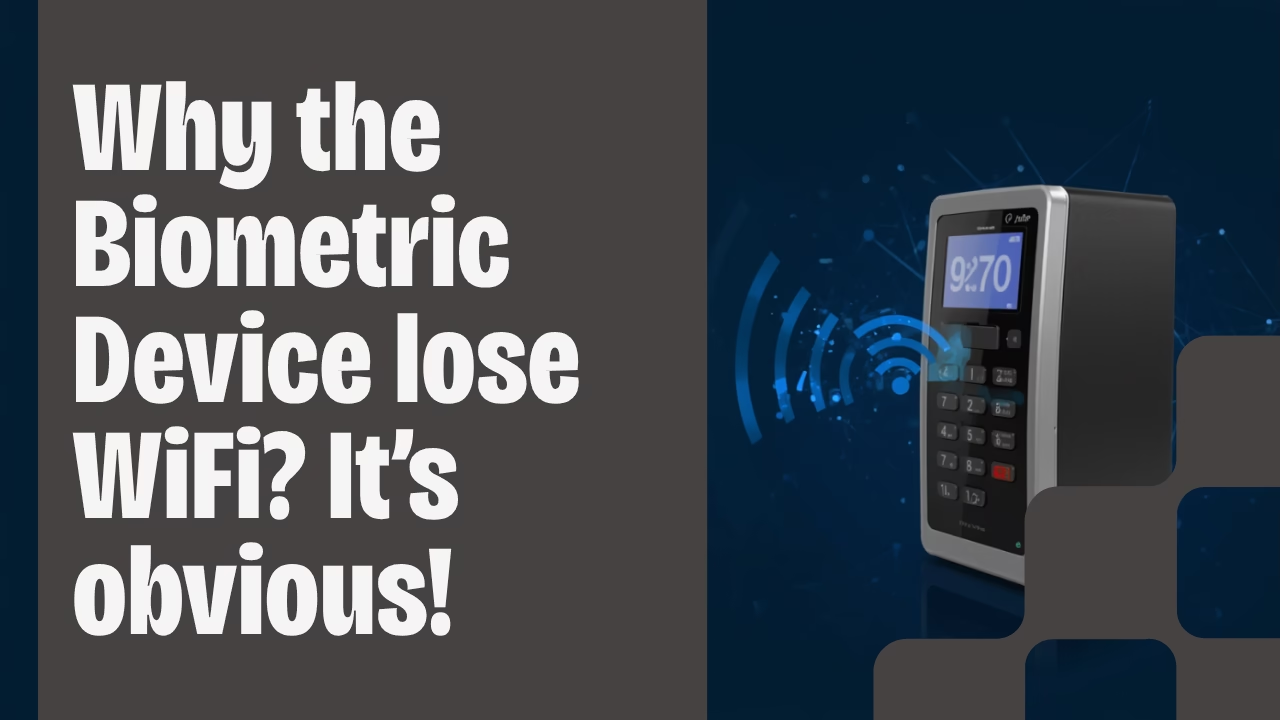
Data gathered from the project file “Essl Biometrics WiFi Connectivity- the obvious issue..pdf” highlights a common networking oversight: assuming a wireless signal is strong enough just because it works during an initial demonstration.
We recently received a service call regarding a Wi-Fi-enabled eSSL biometric attendance machine. The device performed flawlessly during its initial demonstration and continued operating the following day. Shortly after, however, it completely lost its ability to sync and connect with the central database over the wireless network. Interestingly, whenever the client connected the machine directly via an Ethernet cable, it linked to the system without any problems.
Two months passed under this makeshift arrangement. At the beginning of every month, an employee had to physically unmount the attendance machine from the wall, carry it over to an Ethernet wall port, plug it in, and download the accumulated log data. Recognising that this was highly inefficient, the client finally reached out to us for a permanent solution.
The On-Site Diagnostics
Upon auditing the physical infrastructure, our engineering team discovered that the biometric device was installed one floor below the wireless router and nearly on the opposite side of the floor. Distance and structural interference stood out immediately as the primary causes for the dropouts.
To be completely certain—especially since the client had already shifted their router once before to fix this exact issue—we ran a simple configuration test.
We removed the device from the wall and moved it roughly 2.5 metres closer to the source, placing it directly beneath the floor where the router was stationed. Connectivity stabilised instantly.
Overcoming the Deployment Hurdles
During the initial deployment phase, the client had strongly insisted on that specific wall location, confident that the area possessed good Wi-Fi coverage. They actively declined any structural wired network connections. While the setup supported the device for the first 24 hours, structural interference quickly turned the arrangement into a complete nightmare.
Our team explained the localised signal limitations and demonstrated the definitive proof of concept to the customer. With their full approval, we permanently reinstalled the eSSL biometric terminal on the wall at the verified, working location.
Key Takeaway
Issue Resolved: Sometimes the root cause of a technical failure is exactly what it appears to be at first glance. When dealing with wireless edge devices, never ignore physical infrastructure limitations or the obvious constraints of signal distance.


Leave a Reply