
In the quest for the ultimate workstation, the debate between physical cables and cord-free freedom is far from over. While wireless technology has made massive leaps, there are technical pillars where the traditional wire remains unbeaten.
Reliability and Performance: The Speed of Copper
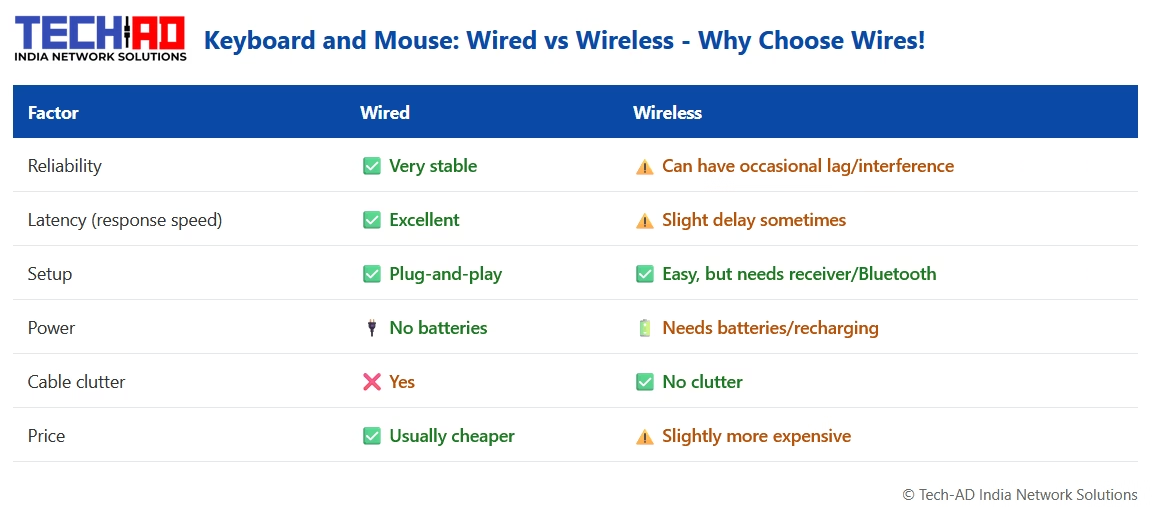
For power users, reliability is the top priority, and a wired connection provides a very stable environment. Conversely, wireless setups can have occasional lag or interference. This is particularly noticeable in latency, or response speed, where wired devices are considered excellent compared to the slight delay that can affect wireless peripherals.
This “lag” is often due to signal collisions with other home devices—like routers and microwaves—that share the same frequency bands.
Setup and Maintenance: Power Without the Hassle
One often-overlooked advantage is the simplicity of the plug-and-play setup. Wireless devices generally require a receiver or Bluetooth connection to function, adding an extra layer to the initial process. Furthermore, power management is a major win for wired gear, because they draw power directly from the host; they require no batteries. In contrast, wireless users must manage batteries or recharging, which can lead to frustrating downtime if a device dies mid-task.
It is worth noting that rechargeable lithium-ion batteries also have a limited lifespan, meaning a wireless device may eventually need to be replaced entirely once the battery stops holding a charge.
Aesthetics and the Bottom Line
The most significant drawback of a wired setup is the inevitable cable clutter. Wireless technology solves this by offering no clutter, allowing for a much cleaner, minimalist desk aesthetic. However, that visual upgrade comes at a financial cost; wireless models are slightly more expensive, while wired options are usually cheaper for the same level of performance.
The Verdict
Choosing between the two comes down to whether you value a clean look over raw technical consistency. If your work requires zero interruptions and high response speeds, the cable is still your best friend.


Leave a Reply