
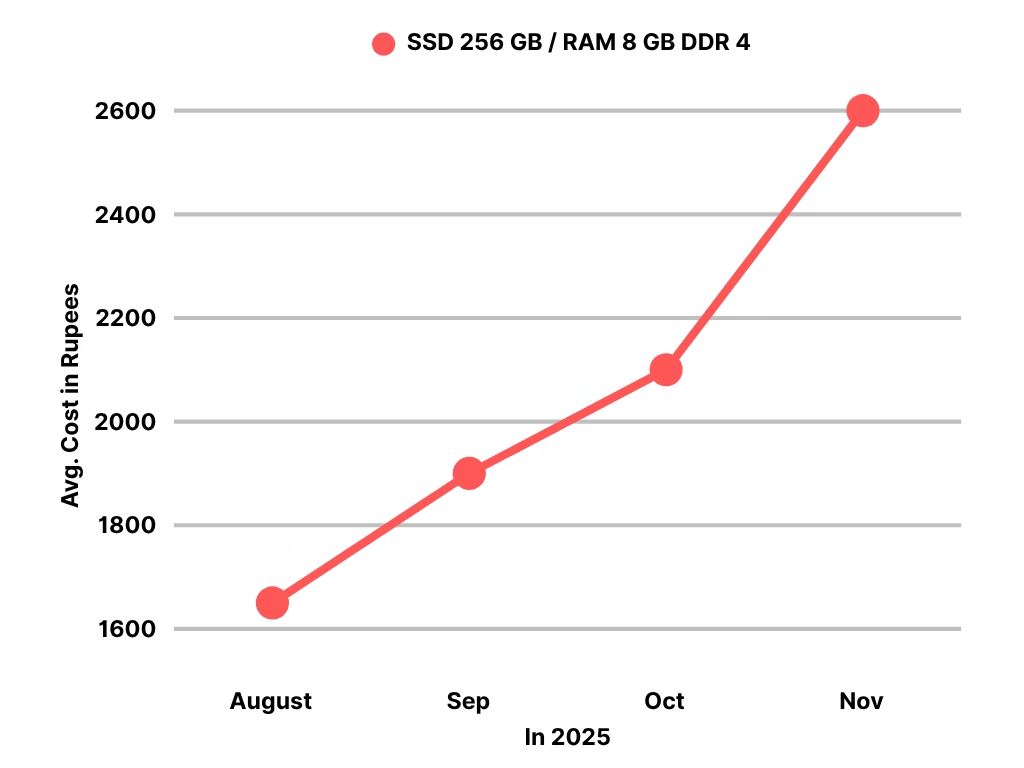
Since early October, prices for PC storage components have been rising steadily, pushing us to reassess our pricing model. In some cases, when customers ask for better rates, we’ve had no choice but to advise them to delay their purchases.
That’s how challenging the situation has become — we’re often forced to choose between losing a sale and losing a customer. So let’s try to understand what’s happening.
Manufacturers Are Cutting Production
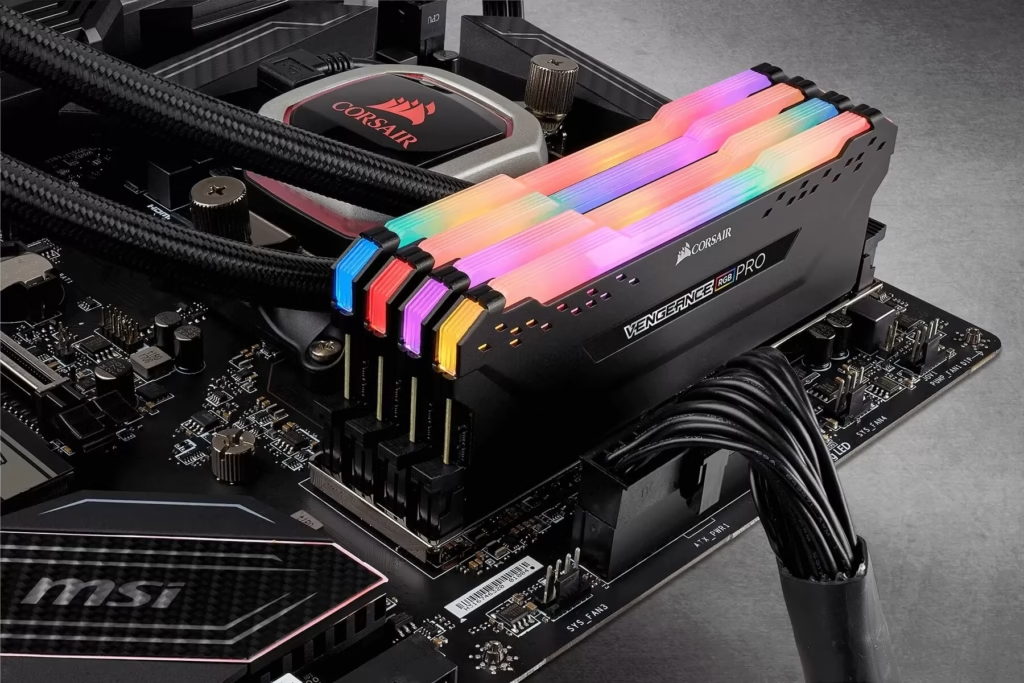
The cost of building a modern PC has been climbing steadily, and one of the biggest reasons is the unexpected rise in SSD and RAM prices. This shift is tied directly to major changes in how memory is produced. Leading memory manufacturers have intentionally reduced their output of NAND and DRAM, the essential components used in SSDs and RAM modules. For years, the market experienced an oversupply of memory, which pushed prices to record lows. SSD upgrades became extremely affordable, making them one of the simplest ways to improve PC performance. However, such low pricing was not sustainable for manufacturers. To rebalance the market and stabilise profits, companies cut back on production, and this reduced supply is now driving prices upward.
AI Demand Is Absorbing Huge Amounts of Memory
Another key factor influencing memory pricing is the explosive growth of artificial intelligence. AI data centres require massive amounts of storage and system memory—far more than what typical consumers or gamers use. As the AI industry expands rapidly, it is consuming a significant portion of global memory production. Even with reduced manufacturing output, demand from AI infrastructure continues to surge, creating a supply imbalance. Because supplying enterprise AI clients is more critical and profitable, consumer products such as SSDs and RAM kits are receiving less production priority, resulting in higher prices across the retail market.
The Era of Cheap SSDs Is Ending
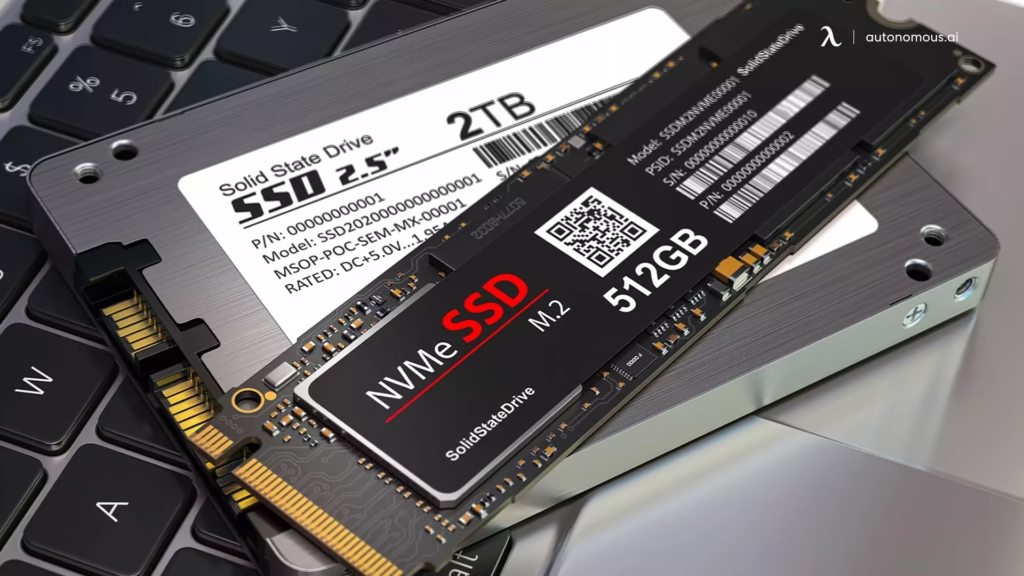
In addition to rising demand, the era of inexpensive entry-level SSDs is effectively ending. Budget-friendly NVMe and SATA SSDs that once made PC building and upgrading more accessible are now harder to find. Many of these cheaper models are no longer being produced in large quantities, and some have been discontinued entirely. With fewer low-cost SSDs available, consumers are left with mid-range or premium models, which naturally come with higher price tags. A similar trend is impacting RAM, where basic and affordable kits are becoming less common, leaving mostly higher-tier options on store shelves.
Rising Memory Prices Are Increasing the Cost of PC Builds
All these factors are contributing to a broader trend across the PC hardware market. Components that were once consistently affordable—especially SSDs and RAM—are now noticeably more expensive. This has pushed the overall cost of building or upgrading a gaming PC higher than it was just a couple of years ago. While graphics card pricing often attracts the most attention, the rising cost of storage and memory is quietly affecting nearly every type of build. For anyone planning a new PC or considering upgrades, the higher prices of SSDs and RAM have become an unavoidable part of today’s hardware landscape.



Leave a Reply